Today I intend to leave the world of Ghosties and Conspiracy for the story of the most famous book in history and the source of many mysteries of it's own.
This is not about belief or lack of it. I leave it to my readers to make up their own minds on that. Just to set the scene, religion and religious books have always been a means of control. Superstition and Gods have had their priests, by whatever name, Those Priests have been a power unto themselves or have allied themselves to those who had power. For our purposes it is the bible we are concerned with. It is The Word Of God, Right?
Well no, not really. The old testament is a creation myth and a history of God and his chosen people. Many elements are common to other religions. There are countless flood myths (As in Noah's Ark.). However it is almost impossible to disprove anything so far back in history.
The New Testament is a different matter. If the story of Jesus and his ministry is true, and if the events after his death are accurate then we have first person testaments from his disciples. The New Testament is excellent first hand evidence.
Except that the whole thing is supposedly the word of Jesus filtered through the understanding of simple men. There would be misunderstandings and stories told which would be given spin in order to reflect the views and prejudices of those men. If there is a gospel of Jesus it would simplify things. That is if we assume the writers were actually the people they claim to be. The Gospel of Judas, though not a biblical gospel, is thought to have been written much later than Judas' lifetime.
Then we have the Book of Revelation by St John the Divine. This is a description of the last days before Armageddon. To me it seems to be totally out of place with the rest of the NT which preaches love and forgiveness while it is about God's revenge on sinners. The imagery seems like a drug induced nightmare rather than a vision from God. One can only assume it was included to put the fear of God into believers. Judging by the horror stories and films made about it, it succeeds.
As any Dan Brown reader will tell you, probably foaming at the mouth with enthusiasm, Pope Damasus I assembled the first list of books of the Bible at the Council of Rome in 382 CE. He commissioned Saint Jerome to produce a reliable and consistent text by translating the original Greek and Hebrew texts into Latin. There were many Gospels (including the famous ones about Jesus' family, and the gospel of Judas which is being posited as proof that the Resurrection never happened) that were never included. The end result was a list of approved books IN LATIN. But it did not include much of the 'Evidence' especially if it didn't agree with accepted doctrine.
This state of affairs continued for many years but the power of Monarchs and Popes depended on the Bible being used as a weapon. The Latin bible ensured that the word of God was filtered through the pronouncements of Popes and Priests. Other things which never appeared in the Bible were the result of changes to canon law. Confession, Purgatory and so on ensured income and the fear of hell kept the lower classes bent to the will of Church and Monarch and Priests preached duty to God, Monarch and your Lords. But none of this was in the bible, it was the work of men.
Then, in the Medieval era came the protestants. They argued that the Word of God (Diluted though it might already be.) Should be available to all. William Tyndale first translated the New Testament into English but even he put certain words in reflecting his own prejudice against the establishment. Before his famous reformation, Henry VIII had Tyndale executed because his translation was dangerous to the Status Quo. If anyone could read the NT they would find that no one had advocated the class system except the Clergy and Nobles.
With Henry VIII's break with Rome he swapped one tyrant for another and in a cynical about face he had someone else translate the bible into English and took credit himself. Yet even then most of the translation relied on Tyndale which persevered even in the King James version and thus into modern interpretations. Despite the break, Henry still believed in the power the Popes wielded but wanted it for himself. Therefore he would execute radical protestants one year and Papists the next, as his mood took him.
The New English Bible itself caused problems. It led to ridiculous (To our eyes!) divisions such as the one which argued for and against the presence of Jesus' body and blood in the Wine and Bread. People were executed for being on the wrong side of this one.
And still the Bible was not available to many from the lower classes. Most were illiterate and still relied on someone else to read to them. Usually it was a priest so very little changed after all the upheaval.
After King James version the bible has remained substantially the same and still does. So is the Bible the word of God? I don't think so but I am an atheist. Even if you are a Christian it is obvious that the Bible has been written, interpreted and used as a tool by men. The extant version is one which ignores unwanted histories. The knowledge of this via the new God internet has meant more and more people can see it.
I would like to believe that Jesus existed but his story has long been corrupted by the actions of men. As for God I don't think he would speak to us via a book when he could speak to us in our heart and soul. Those in power have used this book to keep control of the masses over the years. If there is a God, and I like to think that there is a benevolent soul to the universe, you won't find him in the Bible.
One more thing. In any war, all sides will claim God is on their side and will, no doubt, find evidence for this claim in this Holy Book. If there is a God he must be weeping in despair at the uses men, in their pride, claim for his 'Sacred Word'
Brain
Showing posts with label History. Show all posts
Thursday, 17 September 2015
Monday, 14 September 2015
The cemetary gets a bad press...........They can be really great places to relax.
Some of my friends and family would call me strange. Perhaps those less friendly might think 'Deranged' would be a proper term. Those who are not friends would probably go for 'Should be sectioned for his own good.'
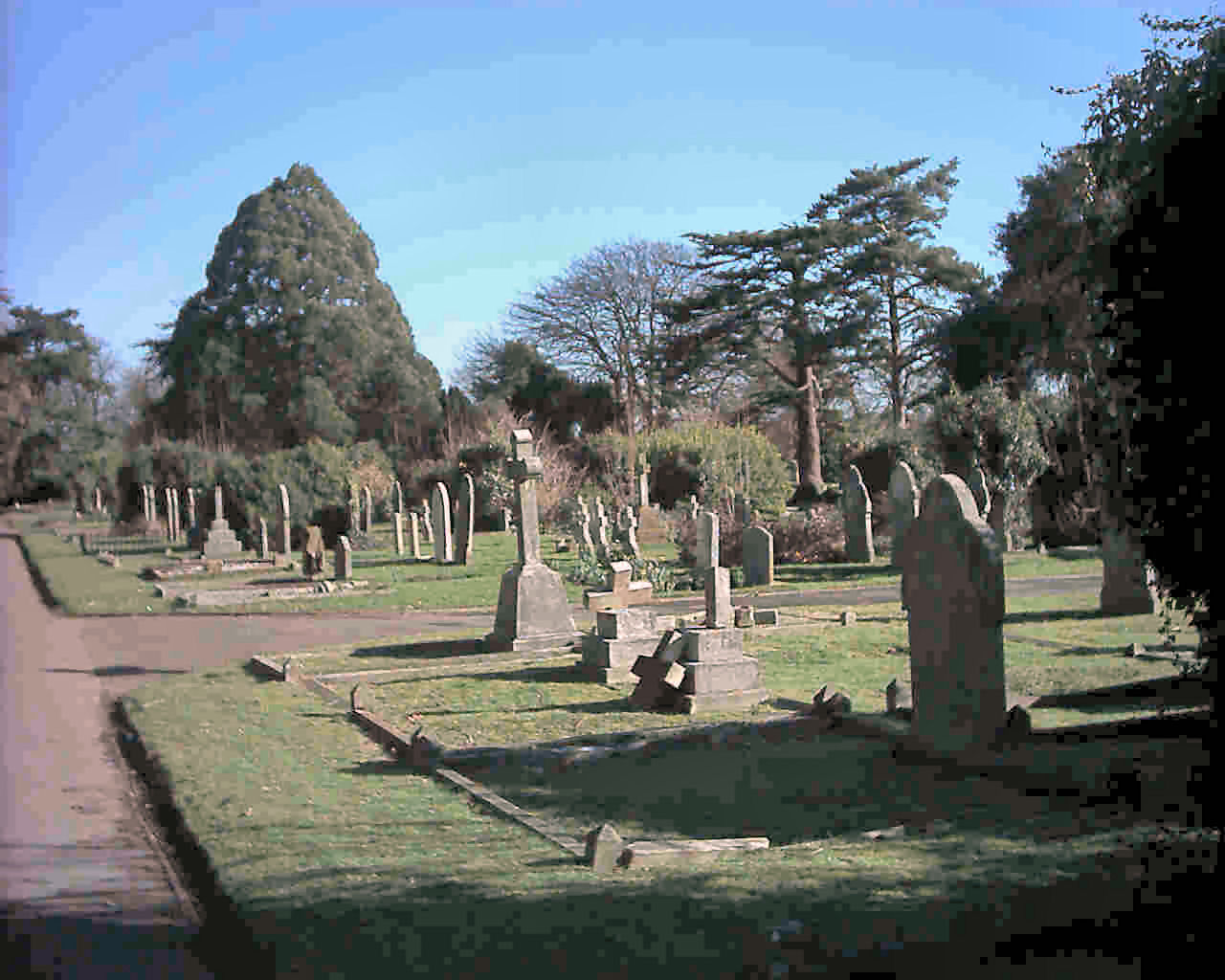
Now one reason for this is that I love a walk in a cemetery (The picture above is the Local one.). Many would now be picturing an ancient Goth slouching along between the Graves but it couldn't be more different. Allow me to explain.
When I was a child we would go to dinner with Nan Elsie on a Sunday. After lunch in the summer she would inevitably announce a visit to the 'Sim'. Flowers in Hand the whole family would walk the mile or so, up tree lined lanes, to the place where most of her family were buried. There was a school in the lane (I later went there.) and it had wooden fences There was a smell of wood stain and the tree roots in the Lane grew up through the pavements. Each tree had a small plinth with the name of a soldier who died in WW1. It is still called the 'Avenue of Remembrance. On wet days there was a smell of leafmould from the last Autumn's fallen leaves that never quite disappeared.
Once in the Cemetary we would go to the family graves. We would perform the ritual of clearing them and laying new flowers. There were metal tanks with taps and watering cans. We would fill the cans and carry them to the graves to water the flowers. It is still a vivid memory.
So in the summer it is one of my favourite places to go. What about the winter though? I still enjoy the cemetery then. There is a stark beauty to gravestones in the cold or with rain or snow sending a shiver down your spine. They will have connotations with death, how can they not. Yet they can evoke so many feelings while we are around to enjoy them.
So go to a Churchyard or Cemetary, open your senses fully and drink in the feelings it can evoke.
Now one reason for this is that I love a walk in a cemetery (The picture above is the Local one.). Many would now be picturing an ancient Goth slouching along between the Graves but it couldn't be more different. Allow me to explain.
When I was a child we would go to dinner with Nan Elsie on a Sunday. After lunch in the summer she would inevitably announce a visit to the 'Sim'. Flowers in Hand the whole family would walk the mile or so, up tree lined lanes, to the place where most of her family were buried. There was a school in the lane (I later went there.) and it had wooden fences There was a smell of wood stain and the tree roots in the Lane grew up through the pavements. Each tree had a small plinth with the name of a soldier who died in WW1. It is still called the 'Avenue of Remembrance. On wet days there was a smell of leafmould from the last Autumn's fallen leaves that never quite disappeared.
Once in the Cemetary we would go to the family graves. We would perform the ritual of clearing them and laying new flowers. There were metal tanks with taps and watering cans. We would fill the cans and carry them to the graves to water the flowers. It is still a vivid memory.
Nan Elsie and Granddad Mac.
Nan introduced me to the delights of the cemetery.
I also recall visiting a grave with my Father, his Brother's I think. It sticks in my mind because it is one of the few times I remember being alone with him. He died when I was 11.
As I grew I started reading inscriptions on the graves, wondering who these people were. There was the grave of a footballer with a marble football carved in white marble. Another had an anchor carved on the headstone. It explained that the man died in an accident on the local creek. That one was doubly interesting because he shared my surname.
Later, graves became important due to my interest in Genealogy. It is one thing to know every date that was important in a given ancestors life. It is quite another to stand before his or her grave, Knowing that this is where they came when their particular race was run. This is another aspect of the Cemetary. If you are worried or troubled, there is a tremendous psychological boost to knowing that all the worry in the world cannot change the fact that we all end up here. Told you I was strange!
Then there is the fact that the Cemetary is a haven for nature in the middle of the mayhem. I first heard a Cuckoo there. Bird song is all around, squirrels run around between the graves and foxes are not unknown. There are no cars and there is little pollution.
When I had a stroke I knew I had to exercise and because of all this, a cemetery is still my favourite place to do so.
So in the summer it is one of my favourite places to go. What about the winter though? I still enjoy the cemetery then. There is a stark beauty to gravestones in the cold or with rain or snow sending a shiver down your spine. They will have connotations with death, how can they not. Yet they can evoke so many feelings while we are around to enjoy them.
So go to a Churchyard or Cemetary, open your senses fully and drink in the feelings it can evoke.
Labels:
atmosphere,
Cemetary,
Exercise,
Genealogy,
Goth,
History,
Mayhem,
Nan Elsie,
Ornithology,
Peace,
Quiet,
Relax
Tuesday, 8 September 2015
Politics and the real world. Why the two will never be mentioned in the same sentence.
Boris Johnson arguably a politician.
It is this concept I wish to examine today. Basically, many years ago ( in the U.K.) we developed a system based on a legislative body called Parliament. This consisted of two groups of
Typical members of the modern House of Lords
These Lords were not elected, being hereditary
But to return to the House of Commons, it is an elected body. Each constituency is fought by whichever Political Party can field a candidate. Each candidate pays a deposit which is forfeit if they do not receive a certain proportion of the vote. It may come as a surprise to learn that some parties field candidates who have no hope of winning and frequently lose their deposit. This is to prove that Parliamentary democracy is alive apparently, though I firmly believe that they are just a group of people with way too much money and nothing better to do with it. One such is the Monster Raving Loony Party. I feel this may not be believed by some but this bit is absolutely true.
Recent Monster raving loony party candidates at a recent election.
Now in the far past anyone could stand for election to Parliament. Absolutely anyone. Except Women. And the insane. And peasants. And those with no money. Alright a few people were qualified from a very narrow social and financial group with loads of vested interests. It is not surprising therefore to realise that it did not have the best interests of every inhabitant of This Scepter'd isle in mind when passing laws.
Then came a little conflict called the English Civil war, whereby Parliament objected to the king only allowing them to sit when he wanted money for wars. After a bit of a brouhaha and some population thinning (Mainly peasants, you guessed didn't you?) we had a few years of Parliament running the country under the control of one Oliver Criomwell (A miserable sod by most accounts).
The English civil war in a nutshell.
It was at this point that the King lost most of his real power. This was the last real major change to British politics and Parliament now rules with the Monarch reduced to traditional ceremonies which bring in the tourists but mean very little, and waving duties.
Any one who can afford the deposit can now stand for Parliament even Women. The insane are still barred but judging by the members of the commons a fair few slip through the net. The enfranchised voters are now anyone over 18 without criminal convictions though I am not sure how the Insane stand re voting. There are those who say that voting for some of the M.P.s that get in these days ARE exhibiting insanity.
So there you have it, an irreverent look at a very brief potted history of English politics. It doesn't tell you everything but then all history is boring. Rotten boroughs and other types of corruption are not even mentioned. I may Blog irreverently on other quirks of the British Isles at a later date because we are a delightfully silly race. I merely wrote this for two reasons
1. Because I enjoy making fun of pompous British tradition.
2. Because, unlike North Koreans, I can satirise my country and it's government without fearing the knock at the door from an unsmiling gent with no sense of humour. The History of my country allows me to do that and, despite the tone of this piece, I am very proud of it.
Sunday, 6 September 2015
Matthew Shardlake mysteries by C.J Sansom a brief review
I have Just finished the Shardlake series of books by C. J Sansom. This is a series of medieval Murder mysteries/Thrillers deeply mired in the religious turmoil of Henry VIII's England.
Shardlake is a lawyer who becomes embroiled in the dissolution of the monasteries. Through the six books he is drawn in to various political plots along with his assistant Barak who is the equivalent of the Detective Sergeant and Bagman in modern books. Shardlake is not always willing to investigate and is manipulated by several patrons. Through the books his own religious convictions are compromised on many occasions. He also feels responsible for many other people who come into his sphere of influence and their stories are expanded over one or more of the books.
The description of Medieval London and other cities is vivid and believable even if you know something of real life in that era. It is a 'warts and all' description, emphasising not just the effects of life on the nobility and royalty, but noting the terrible burden on the common people and the underclass of the time.
The plots are well crafted and convoluted and, with one exception, the endings are surprising.
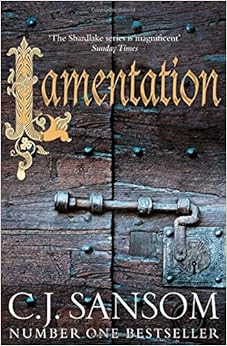
I am not sure if the last book 'Lamentation' signals the end of the series. I have no wish to spoil things but the book involved strained relationships between many main characters. Shardlake himself contemplates retirement and the ending hints that he no longer wishes to involve himself in more politics. However some issues are left unresolved. On balance I feel the author wishes to move on.
I would recommend the series because you follow Shardlake on his personal journey and see his principals give way to a more jaded view of life over the 6 books. Each book can be read as stand alone but previous plots are mentioned in each one. Not having read the previous stories does not detract from the current story, however. Here are the details in order. Most libraries will be likely to keep them. I hope you will enjoy them as I did.
| Title | Year | Publisher | ISBN | Awards |
|---|---|---|---|---|
| Dissolution | 2003 | London:Macmillan | 1-4050-0542-4 | Nominated for the 2003 Crime Writers' Association (CWA) John Creasey Memorial Dagger, for first books by previously unpublished writers. It was also nominated for the CWA Ellis Peters Historical Dagger in the same year.[2] |
| Dark Fire | 2004 | London:Macmillan | 1-4050-0544-0 | Awarded the Crime Writers' Association Ellis Peters Historical Dagger award in 2005.[3] |
| Sovereign | 2006 | London:Macmillan | 0-3304-3608-2 | |
| Revelation | 2008 | London:Macmillan | 0-3304-4710-6 | Shortlisted for the Books Direct Crime Thriller of the Year 2009[4] and the Crime Writers Association Ellis Peters Historical Dagger in 2008.[5] |
| Heartstone | 2010 | London:Mantle | 1-4050-9273-4 | Shortlisted for the 2011 Walter Scott Prize[6] |
| Lamentation | 2014 | London:Mantle | 978-1447260257 |
Subscribe to:
Posts (Atom)